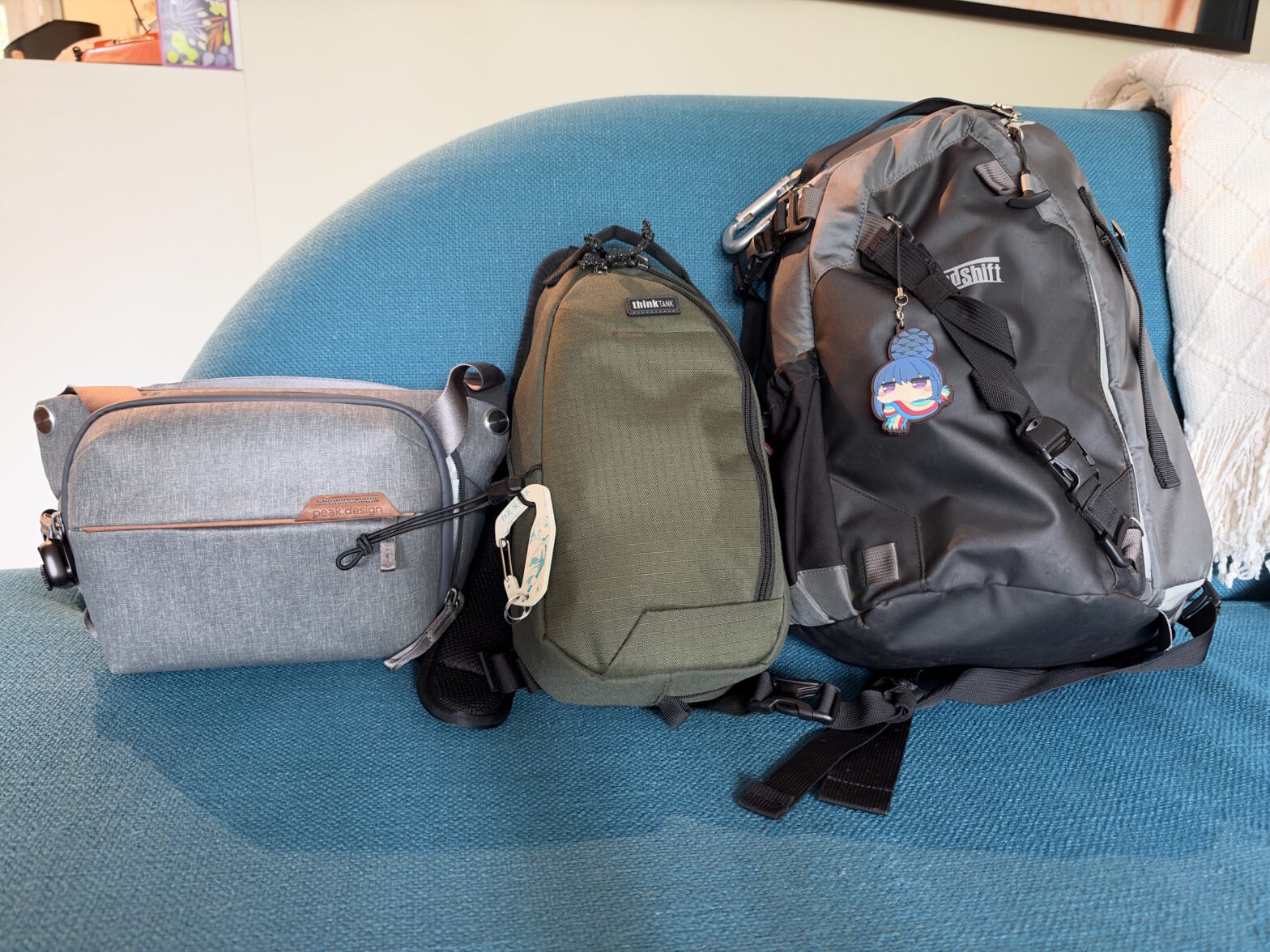
For almost as long as I’ve had a digital camera, I’ve had a camera bag to go along with it. Over the years, as my kit has evolved, so has my camera bag.
For the longest time, I made do with a single camera bag – in the early days I had a basic Lowepro Slingshot bag – but as time went on and I wanted something more “backpack like” I ended up with what is my current main camera bag: a MindShift PhotoCross sling bag.
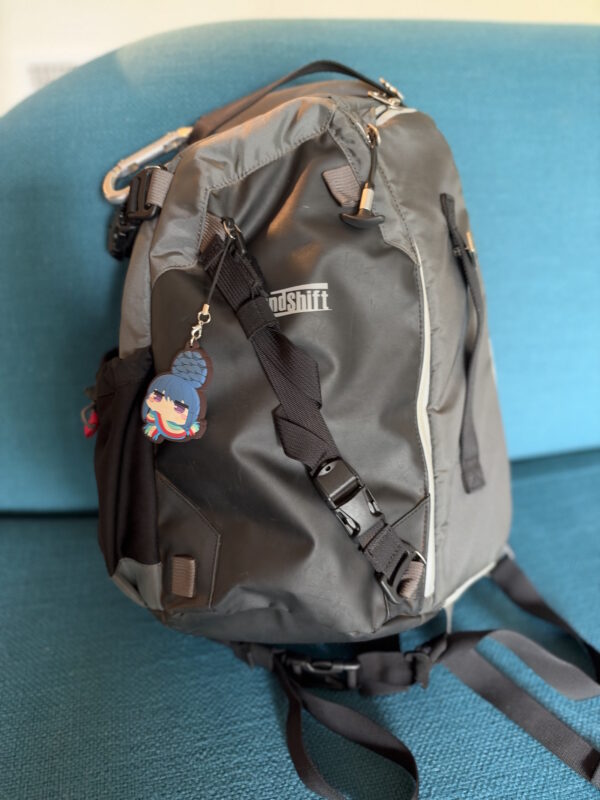
This bag is more backpack-like and less obviously a “camera bag.” It has less structured padding, but it still holds and protects my gear just fine. It is also big enough to hold all of my camera gear:
- Panasonic Lumix GX7 camera
- 4 lenses
- Lumix 12-35mm
- Lumix 20mm f/1.7 pancake lens
- Lumix 45-200mm Zoom
- Voightlander 25mm f/0.95
- My various filters:
- Conkin ND (neutral density) filter
- Set of 3 Conkin ND grad (graduated) filters and the mount for them
- 2 polarizing filters (for the different size lens mounts)
- A variable ND filter
- Remote shutter cable
- Spare battery
- Memory cards
- Battery pack (for my phone)
- Flashlight
- Red night flashlight
On top of this, it has room for my phone and my wallet, along with a keychain hook to hold my keys, and an external pocket that can hold a water bottle or my mini-tripod. It also has straps on the back where I can put a jacket, umbrella, or other things, there’s an internal compartment big enough to hold a small (13 inch) laptop or anything else flat like that, and it came with a rain cover which fits in one of the pockets. Even with all this, nothing is packed in super tight and there’s room for other things should I need them.
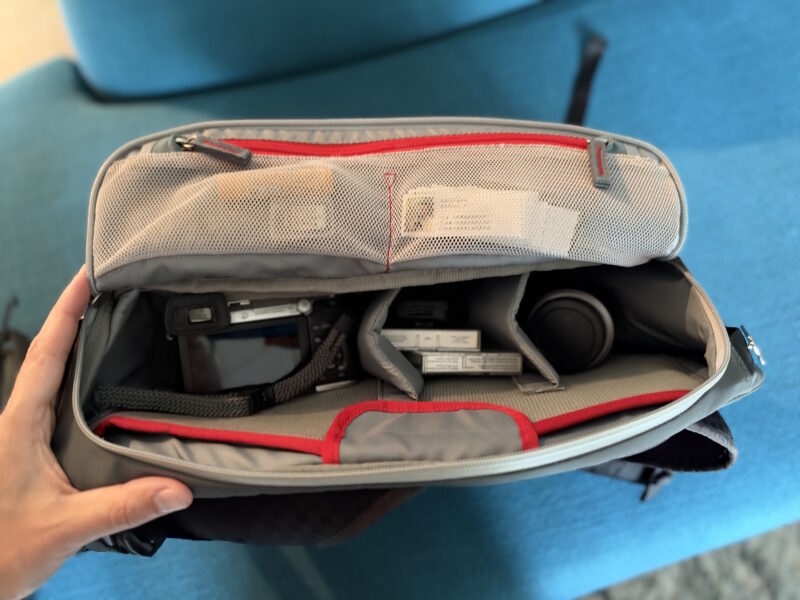
Overall, this is a great bag – and for many years, it was my only bag, and it served me well and traveled all around the world with me.
However, in recent years it has started to become somewhat problematic, particularly when traveling by air due to the more restrictive policies regarding carry-on baggage. Also, sometimes when I’m on vacation I don’t like having to carry absolutely all of my camera gear with me – depending on the location or the type of trip, I may only need a small fraction of that gear.
So for these reasons I decided to try and find a smaller bag, something more like a shoulder bag rather than a backpack. In the end, I got a Peak Design “Everyday Sling” bag, which not only looked quite stylish, but also had a mounting point for a quick-connect on the side, so I could mount my camera there and access it quickly. Despite being called a “sling” bag, it was more of a shoulder bag – the strap goes across your shoulder and the bag sits at your hip rather than on your back.
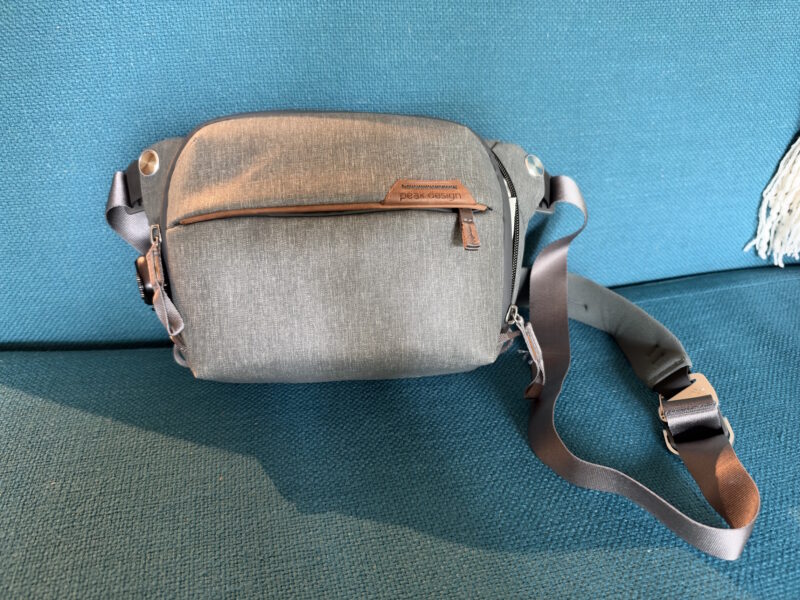
This setup was the complete opposite of my MindShift bag – a very deliberately minimalist setup. The Peak Design bag could hold my camera and perhaps 1 or 2 other lenses, and that’s it. It has a very small pocket for the spare battery and memory card, and a front pocket that is just barely big enough for my phone (and nothing else).
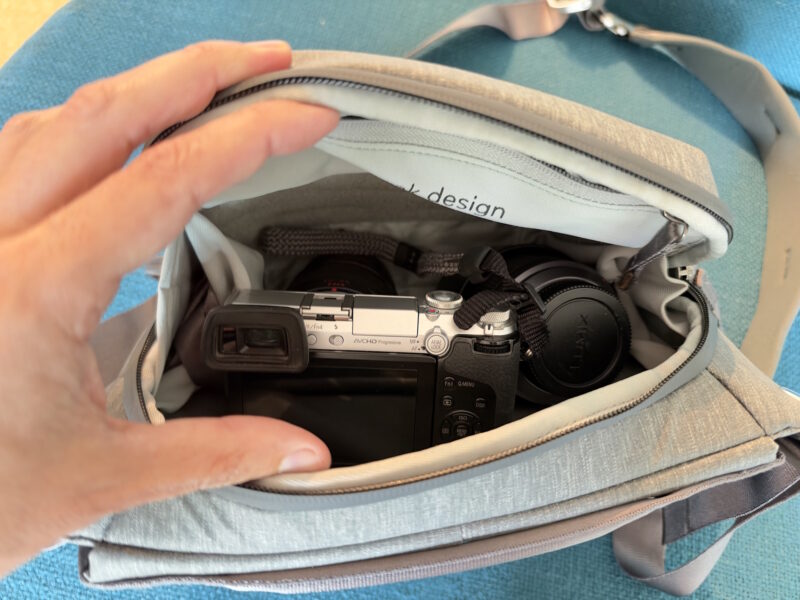
The Peak Design bag does have a clever system of hooks and straps that let you attach something to the bottom of the bag – such as a jacket or a water bottle or some umbrellas (all of which I’ve used and carried this way) but it remains a very small bag. It’s great for when I know I don’t need (or want) to have all my gear with me, and I just want something really, really lightweight. The quick-connect mount on the outside is also super-handy for when I’m on vacations doing sightseeing – it keeps my camera secure and locked, but lets me grab it quickly.
All that said, however, the Peak Design bag still takes up a bit of room in my luggage when I travel, despite the fact that it doesn’t hold very much camera gear. So although I like it quite a bit, I still felt like I needed something more middle-ground, between the Peak Design and the MindShift bag.
The most recent addition to my bag collection is that exact “middle ground” bag, and what will probably be my new de-facto travel bag: a Think Tank Photo TurnStyle Sling bag.
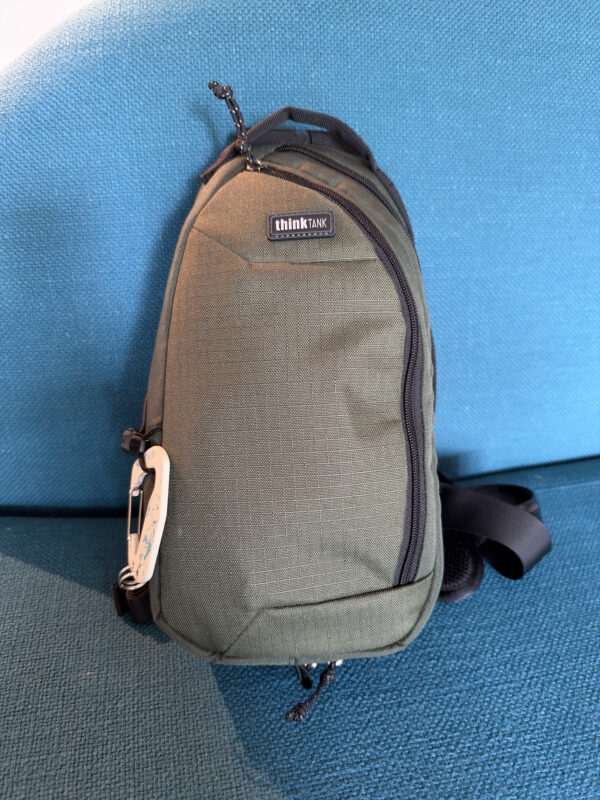
The Think Tank bag is just the right size to hold my “main” camera setup: my camera, plus the 3 lenses I use most often (the 3 Lumix lenses). It also has space for a spare camera battery, a battery pack for my phone, plus room for a few other small things.
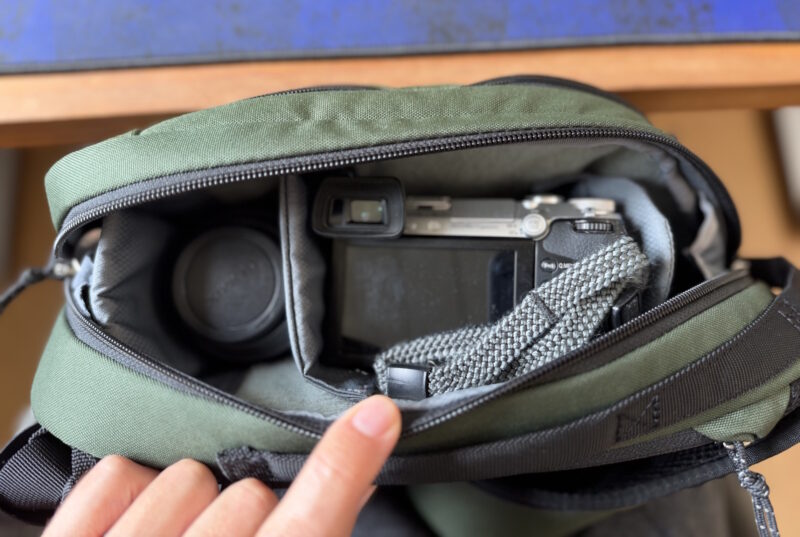
Despite its small size, the Think Tank bag still has a rain cover (tucked into a small pocket at the bottom) and a fold-out pocket on the side that can hold a water bottle (just like on my MindShift bag), so it has that utility going for it as well.
Best of all, the Think Tank bag is only just a little bit bigger than the Peak Design bag, yet it holds much more. It takes up only a little bit more space in my luggage, but lets me bring my full setup – perfect for when I’m traveling but want to have access to multiple lenses (or I can swap out a lens to carry filters instead).
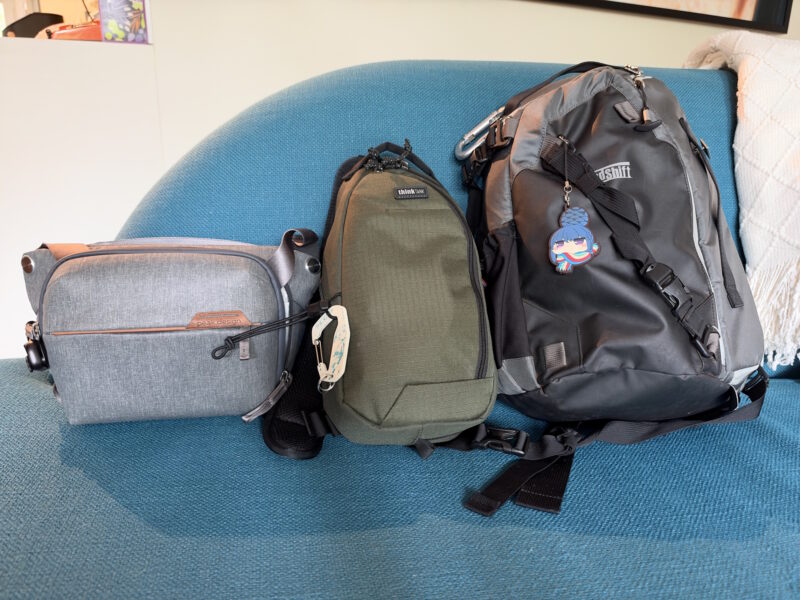
With this, I now have a complete set of camera bags – instead of trying to make one bag do everything, I have 3 bags that each fit a different need:
- MindShift bag for when space isn’t a concern, and I want to have all my gear with me (such as when I go for a photowalk locally, or travel where baggage space isn’t a concern)
- Think Tank bag for when I need to travel light, but still want to be able to take enough gear to cover multiple shooting scenarios (such as when I’m traveling by air but want to bring a decent setup with me for photos)
- Peak Design bag for when I really want to travel light and just take my camera and maybe one lens (such as a day trip into New York City or somewhere else local where photography maybe isn’t the main focus, but I still want to have my camera with me)
While this does mean that I have to shift my gear from bag to bag sometimes, I think it’s worth it to be able to have the flexibility of choosing the “right” bag for a given situation.
This setup also highlights one of the main reasons I continue to shoot with micro four-thirds, even in this day of compact full-frame sensor cameras: size. My gear covers a tremendous range of shooting situations, yet it remains compact in a way that most full-frame (or even APS-C sensor) shooters could only dream of. Even my bigger MindShift bag is relatively light and easy enough to wear all day, and the other bags are even lighter.
Overall I’m very happy with this selection of camera bags that I’ve ended up with. I know “camera bags” aren’t exactly the most exciting of topics, but I get a strange joy out of crafting just the right setup that fits my needs.



Finding the Right Camera Bag: wherein I go on _at length_ about why I now own 3 different camera bags and the excuses I've used to justify them to myself. 😉
https://www.starkeith.net/coredump/2026/09/27/finding-the-right-camera-bag/
#blog #photography #CameraBags
Remote Reply
Original Comment URL
Your Profile
Why do I need to enter my profile?
This site is part of the ⁂ open social web, a network of interconnected social platforms (like Mastodon, Pixelfed, Friendica, and others). Unlike centralized social media, your account lives on a platform of your choice, and you can interact with people across different platforms.
By entering your profile, we can send you to your account where you can complete this action.